
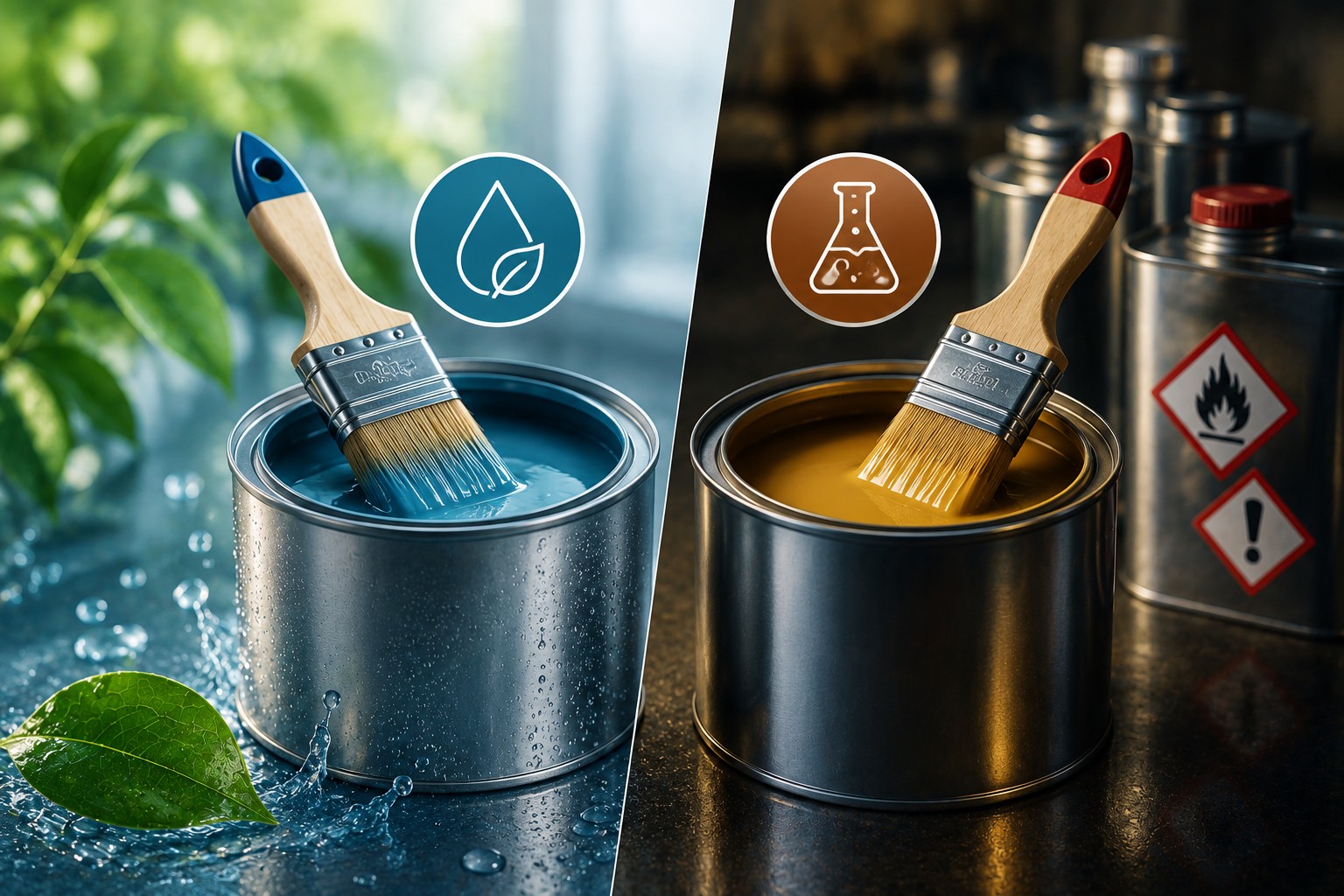
Differences Between Water-Based and Solvent-Based Paints
In the paint and coating industry, water-based and solvent-based systems are two fundamental groups of paints used to meet different application requirements. With advances in technology, interest in water-based systems has been increasing, particularly in applications where the goal is to reduce emissions and environmental impact.
So, what are the key differences between water-based and solvent-based paints?
What Is Water-Based Paint?
Water-based paints primarily use water as the carrier phase. Depending on the resin and formulation structure of the product, systems can be developed for different surfaces and application methods.
Water-based paint and varnish systems can be used in a wide range of applications, including metal, wood, furniture, panel radiators, and decorative finishes.
What Is Solvent-Based Paint?
In solvent-based paints, organic solvents are used to dissolve the resin and bring the product to a suitable consistency for application.
Solvent-based systems have been used for many years, particularly in industrial coating applications. Different formulations can be developed according to criteria such as durability, surface compatibility, and process requirements.
Key Differences Between Water-Based and Solvent-Based Paints
VOC and Emissions
VOC stands for volatile organic compounds. In the paint industry, VOC content is an important criterion when evaluating environmental impact and emissions in the application environment.
With appropriate formulations, water-based systems can enable the development of products with lower VOC levels. For this reason, water-based technologies represent an important alternative for applications where low emissions are targeted.
Odor and Application Environment
Because water is used as the carrier in water-based systems, many products can produce less odor compared with solvent-based systems.
However, odor and emission levels are not determined solely by whether a paint is water-based or solvent-based. The resin, additives, type of solvent, and overall product formulation can also affect these properties.
Drying Process
For both types of paint, drying time varies depending on the product formulation, ambient temperature, humidity level, film thickness, and application method.
Therefore, it cannot be stated simply based on the type of paint that one system dries faster than the other. Especially in industrial applications, the entire production process should be taken into consideration.
Areas of Application
Water-based and solvent-based systems can be used across different industries and applications.
Water-based technologies are used not only for decorative paints, but also for metal coatings, anticorrosive primers, dip coatings, panel radiator systems, and wood and furniture paints and varnishes.
Solvent-based systems, on the other hand, continue to be used particularly in specific industrial applications and specialized coating systems requiring high performance.
Which Paint Should Be Preferred?
The right paint should not be selected solely based on whether it is water-based or solvent-based.
Surface type, application method, drying conditions, expected durability, VOC requirements, production line, and environmental objectives should all be evaluated together.
Especially when planning to convert an existing solvent-based system to a water-based system, it is important to technically evaluate the product’s compatibility with the existing surface and production process.
Both water-based and solvent-based paint systems have different application areas and technical characteristics. While water-based technologies offer an important alternative for applications targeting low VOC levels and reduced emissions, the right product should be selected by evaluating the specific technical requirements of each application.
SUBATEK develops different water-based paint and varnish solutions for decorative, metal, anticorrosive, dip coating, oven-curing, wood, and furniture applications.